
Smart glass reduces visual clutter and controls light to sharpen staff focus, masking peripheral movement and reflections that interrupt attention. Rapid glare reduction and precision tinting maintain consistent visual comfort and support circadian-friendly schedules. Selective frosting protects confidentiality while preserving openness for spontaneous collaboration smart glass. Preset opacity scenes and remote control speed room turnover and signal expected behaviors. Integration with lighting, HVAC and sensors boosts efficiency and measurable ROI. Continue for practical implementation details and performance metrics.
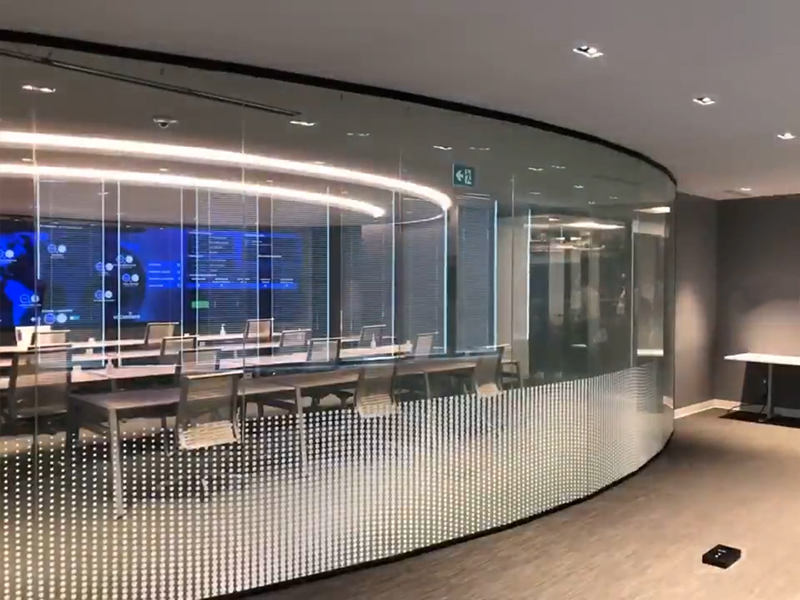
The Science Behind Reduced Visual Distraction
Often, workplaces that adopt smart glass experience measurable reductions in visual distraction because the technology selectively modulates transmitted light and transparency to prioritize task-relevant visual fields smart glass film. The system diminishes visual clutter by masking peripheral movement and reflections, enabling sustained attention on primary displays or interactions. Neurocognitive research links reduced competing stimuli to faster attention restoration during brief breaks, supporting efficient task resumption. For staff and clients seeking autonomy over their environment, smart glass provides discreet, controllable cues that align sensory input with intent. Outcomes include improved focus, fewer interruptions, and a perception of professional calm without restricting mobility or choice.
Adjustable Light Control for Better Concentration
Adjustable smart glass enables rapid glare reduction to prevent interruptions from harsh sunlight and screen reflections. It also allows precision tuning of natural light levels to maintain consistent visual comfort throughout the day. Together, these capabilities support sustained concentration by aligning ambient lighting with task requirements.
Reduce Glare Quickly
Reduce glare instantly by applying smart glass to workspace glazing, allowing staff to maintain focus without repositioning desks or pulling down blinds. The technology replaces traditional anti glare films, offering adaptive control and cleaner aesthetics. With quick tint switches, teams regain visual comfort in seconds, minimizing interruptions and preserving workflow momentum. Decision-makers value the autonomy to respond to changing light while avoiding cumbersome hardware. Implementation is strategic: targeted zones, simple controls, measurable productivity gains. Clients perceive professionalism as unobstructed sightlines and consistent presentation quality. The result is liberated staff performance and refined client impressions through efficient, responsive glare management.
Tune Natural Light
By modulating daylight intensity and spectrum through smart glass, organizations create environments that support sustained concentration and cognitive performance. Smart glass enables daylight harvesting and circadian tuning, aligning indoor light with task demands and biological rhythms to boost focus while preserving autonomy. Settings can be scheduled, manual, or sensor-driven to match peak productivity periods and personal preferences. Strategic deployment balances natural illumination with privacy and visual comfort, reducing reliance on artificial lighting and energy costs.
- Automated circadian tuning schedules
- Manual override for personal control
- Sensor-based daylight harvesting
- Zone-specific intensity presets
Enhancing Privacy Without Closing Off Teams
Balancing visual privacy with team connectivity requires carefully chosen glass solutions that limit sightlines without creating isolation. The approach integrates acoustic zoning and visual cues to protect focus while preserving openness. Smart glass selectively frosts or tints to define individual or small-group areas, letting teams maintain awareness without intrusion. Acoustic treatments paired with switchable transparency create quieter pockets for concentrated work and confidential conversations. Visual cues—subtle banding, color accents, or opacity gradients—signal expected behaviors and respect boundaries. The strategy enables freedom of movement and spontaneous collaboration while safeguarding concentration and client confidentiality through deliberate, reversible interventions.

Streamlining Meeting Room Transitions
With minimal physical intervention, smart glass accelerates meeting room turnover by enabling instant reconfiguration of space visibility and privacy. It supports quick setup through preset opacity scenes, allowing teams to reclaim time and preserve autonomy. Remote controls and scheduling integrations enable a seamless handoff between sessions, reducing interruptions and maintaining professional impressions. The approach favors flexibility and predictable shifts, empowering staff and clients to move freely without manual adjustments.
- Faster room readiness via presets
- Automated schedules for predictable flow
- Remote controls for occupant autonomy
- Clear visual cues to prevent overlap
Promoting Employee Well‑Being and Comfort
In modern workplaces, smart glass contributes to employee well‑being by providing adjustable visual environments that reduce glare, control daylight exposure, and support privacy without physical barriers. By enabling individualized light settings, it complements ergonomic seating arrangements and promotes focused work periods while permitting open-plan freedom. Dynamic glazing helps maintain thermal comfort, reducing HVAC strain and minimizing temperature-related distractions. The system supports predictable routines, fewer interruptions, and clearer boundaries between collaboration and concentration. Implementation strategies prioritize user control, simple interfaces, and integration with building sensors. Measurable outcomes include improved comfort scores, reduced complaints, and higher self-reported autonomy among staff.
Strengthening Client Confidence and Perception
A thoughtfully implemented smart glass system can enhance client confidence by signaling modernity, transparency, and attention to comfort, creating an environment that reinforces professional credibility. It supports professional rapport and brand consistency through controlled visibility, consistent aesthetics, and predictable environmental comfort. Clients perceive competence when spaces communicate intentional design and respect for privacy.
- Immediate visual cues of modern, transparent design
- Privacy control that respects client autonomy
- Consistent look aligned with brand identity
- Comfortable environments that reduce client anxiety
Such settings empower clients, project reliability, and subtly strengthen trust without intrusive measures.
Integration, Automation, and ROI Considerations
How can smart glass systems be integrated into existing building management and automation frameworks to maximize operational efficiency and return on investment? Strategic system integration aligns smart glass controls with HVAC, lighting, and security platforms to reduce energy use and manual intervention. Automation schedules tinting and privacy modes to support staff focus while preserving client experience, enabling scalable policies that respect occupant freedom. Data feeds inform predictive maintenance, minimizing downtime and extending asset life. Clear KPIs—energy savings, productivity metrics, maintenance costs—quantify ROI. Decision-makers gain flexibility to pilot, measure, and scale deployments that balance operational efficiency with user autonomy.
Conclusion
Smart glass presents a strategic asset for workplaces seeking to optimize focus and elevate client impressions. By reducing visual distraction, enabling adjustable light control, and offering privacy without isolation, it streamlines room usage and supports employee well‑being. Integrated automation enhances user experience and operational efficiency while measurable energy and space benefits strengthen ROI. As a cohesive solution, smart glass aligns aesthetic, functional, and financial objectives, reinforcing professionalism and confidence in both staff and clients.